
当一位作者说她不得不拒绝17.5万美元的奖项时,这说明了出版界的什么?
Helen DeWitt turning down the Windham-Campbell literary award caused controversy. But her bold act highlights that such prizes aren’t always as meritocratic as they might seem
“A “A”ll you need is a five-minute spot on a morning TV show,” a colleague told me recently. “Then everyone will buy your novel.” I tried to picture myself, with my horror of being filmed, in thick orange makeup, perched on a sofa in a brightly lit studio while trying to talk about how the French critic Hélène Cixous inspired me to want to write the first great ovulation novel. It sounded ridiculous for all involved.
你只需要一个早间电视节目的五分钟时段,“一位同事最近告诉我。“那大家都会买你的小说。”我试着想象自己,带着被拍摄的恐惧,涂着浓浓的橙色妆容,坐在明亮的摄影棚里的沙发上,试图谈论法国评论家海伦·西苏如何激励我写第一部伟大的排卵小说。这对所有人来说都显得荒谬。
Yet when you’re a writer, you are supposed to take every opportunity you can get. That was the attitude to news that Helen DeWitt had turned down the $175,000 (£129,000) Windham-Campbell prize on the basis of being unable to fulfil its promotional obligations, which included six to eight hours of filming. The prize, which this year was given to eight writers in recognition of their life’s work, is intended to give recipients time and space to work independently of financial concerns.
但作为作家,你应该抓住每一个机会。当海伦·德威特拒绝了 175,000 美元 (129,000 英镑)的温德姆-坎贝尔奖,理由是无法完成包括六到八小时拍摄在内的宣传义务时,这种态度就是如此。今年该奖项颁发给八位作家,以表彰他们的毕生贡献,旨在给予获奖者独立创作的时间和空间,摆脱经济压力。
DeWitt is a critically acclaimed author, and her debut novel, The Last Samurai – published 26 years ago – is widely regarded as a work of innovative genius. Opinions on her recent stance are strongly divided: some have praised her principled refusal to play the self-promotion game that takes so much out of writers, while others have called her a spoilt, entitled nightmare.
德威特是一位备受好评的作家,她的处女作《最后的武士》——26 年前出版——被广泛认为是创新天才之作 。对她近期立场的看法分歧很大:有人称赞她坚持原则,拒绝玩弄那些让作家疲惫不堪的自我宣传游戏,而另一些人则称她是个被宠坏、自以为是的噩梦。
A prize like that is the dream, and the DeWitt controversy has somewhat overshadowed the eight other winners. One is Gwendoline Riley, an author of wry, quiet books exploring family relationships. Riley has a certain cachet, but her immense talents have long been overlooked and she was dropped by a previous publisher. Pleasingly, she rarely smiles in photographs. On receiving the prize she sounded stunned. It is a huge sum that any writer cannot help but spend in their head.
这样的奖项是梦想,而德威特的争议在某种程度上掩盖了其他八位获奖者。 其中一位是格温多琳·赖利 ,一位以幽默、安静的作品探讨家庭关系的作家。赖利有一定的声望,但她巨大的才华长期被忽视,之前的出版社也曾放弃她。令人欣慰的是,她在照片中很少微笑。她接过奖品时听起来很震惊。这是一笔巨额的钱,任何作家都无法不在脑海中花费。
Unless you’ve written one of the few titles earmarked as bestsellers on acquisition (which come with the marketing budgets to match), times are tough out there. So certain “moments” have the potential to make your career: a prize, a TV appearance, Kaia Gerber reading your novel on a sunlounger, Dua Lipa selecting it for her book club. Literary fiction is in Vogue in both senses, though whether that translates to actual sales and career longevity is uncertain.
除非你写过少数几本被定位为畅销书的作品之一(而且还配有相应的营销预算),否则外面的时代确实很艰难。所以某些“时刻”有可能成就你的职业生涯:奖项、电视露面、凯娅·格伯在躺椅上读你的小说、杜阿·利帕为她的读书会选书。文学小说在这两种意义上都处于时尚状态,尽管这是否能转化为实际销量和职业生涯长久尚不确定。

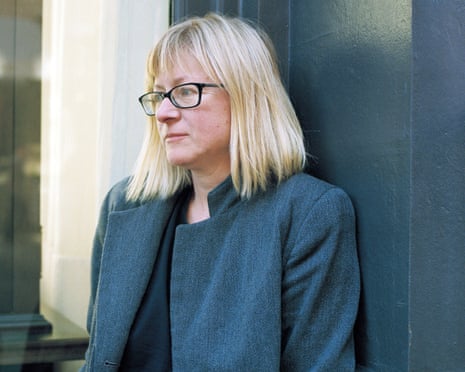
作家格温多琳·赖利,今年温德姆-坎贝尔奖的获奖者之一。 照片:苏珊娜·贝克-史密斯
You only need to look at average author earnings to see that, for most people, literary writing is an unstable career (I am on track to die a renter). Yes, to an extent that is our choice, but its precarity is only increasing. Reading through DeWitt’s posts, a picture of a supremely talented writer emerges, one who has faced long periods of living hand to mouth, being out of print, tricky paths to publication causing untold stress, struggles with depression and executive dysfunction, and caring responsibilities. Many authors can empathise.
你只需看看作者的平均收入 ,就能发现对大多数人来说,文学写作是一条不稳定的职业(我注定会成为租客)。是的,在某种程度上这是我们的选择,但它的脆弱性只会越来越大。阅读德威特的文章 ,可以勾勒出一位极具天赋的作家形象:他经历了长期的勉强生活、绝版、出版之路艰难且带来无尽压力,抑郁和执行功能障碍,以及照顾他人的责任。许多作者都能产生共鸣。
Unable to commit to the promotional work required, DeWitt says she asked the prize organisers for adjustments that they ultimately refused. According to the novelist Daisy Lafarge, this revealed an attitude to disability and chronic illness that is “impoverished and embarrassingly outdated”. “The prize’s refusal to meet her halfway exposes something I’ve found to be endemic in the book world,” says Lafarge, who adds that the art world is way ahead on facilitating the access and assistance needs of artists. In publishing “if you’re not able-bodied, your choices are to drop out or just grit your teeth”. Both are costly.
由于无法承担所需的宣传工作,德威特表示她曾向奖项组织者提出调整,但最终被拒绝。据小说家黛西·拉法尔格(Daisy Lafarge)所说,这反映了一种“贫困且令人尴尬地过时”的残疾和慢性病态度。拉法尔格说:“奖项拒绝与她妥协,暴露了我发现书籍界普遍存在的问题,”她补充说,艺术界在促进艺术家获取和援助方面已经走在前列。在出版领域,“如果你身体不健全,你的选择就是辍学,要么咬紧牙关”。两者都非常昂贵。
Another author, who asked to remain anonymous, had a different view. “Someone was offered an opportunity which for various reasons she had to decline. That is fine. Were I offered a six-figure sum in exchange for running a marathon, I would have to decline. In all walks of life there are social and mental and physical conditions that make some opportunities unsuitable.” They note that this sort of thing happens all the time – to disabled people, to people with health issues, to carers and people without childcare help. It is only the sum of money that has made people take notice.
另一位要求匿名的作者则持不同看法。“有人被提供了机会,但因各种原因她不得不拒绝。没关系。如果有人给我六位数的报酬来换取跑马拉松,我也必须拒绝。在各行各业,社会、心理和身体条件都使得某些机会不适合。”他们指出,这种情况经常发生——无论是残疾人、健康问题者、照顾者还是没有托儿帮助的人。只有这笔钱让人们注意到了这一点。
Yet this controversy doesn’t only highlight inclusivity issues in publishing. It’s also that writing no longer feels like the main job. Many writers are oddballs, and some are geniuses whose giftedness is arguably a form of neurodivergence. Artists such as that can be sensitive and difficult. They need uninterrupted time to create. They do not fit easily into the world of professionalised self-promotion that constitutes modern publishing. As DeWitt wrote in a blog post: “We can think of so many writers we admire for whom the whole thing would be unthinkable – off the top of my head, Dickinson, Proust, Kafka, Beckett, Pessoa, Salinger, Harper Lee, Pynchon, DeLillo, Cormac McCarthy, Ferrante.”
然而,这场争议不仅凸显了出版行业的包容性问题。而且写作不再是主要的工作。许多作家都很怪异,有些是天才,他们的天赋可以说是一种神经多样性。像这样的艺术家可能敏感且难以相处。它们需要不被打扰的时间来创作。它们很难融入现代出版业中专业化自我宣传的世界。正如德威特在博客中写道:“我们能想到许多我们敬佩的作家,对他们来说整个故事都难以想象——我能想到的,狄金森、普鲁斯特、卡夫卡、贝克特、佩索阿、塞林格、哈珀·李、品钦、德里罗、科马克·麦卡锡、费兰特。”
Shedding light on the industry is crucial. How many readers know that prizes aren’t as purely meritocratic as they appear? That they can have secretive nomination processes – some allowing only one or two entries per imprint, dependent on track record – and come with promotional strings attached? That none of it can be said to be truly fair? That, ultimately, we are all scrabbling for scraps?
揭示行业状况至关重要。有多少读者知道,奖项并不像表面看起来那么纯粹是功绩主义?他们可以有秘密的提名流程——有些甚至每个品牌只能提名一到两个,取决于业绩——并且附带宣传条件?这一切都不能说是真正公平的吗?说到底,我们都在拼命捡点残羹剩饭?
There is so much about publishing that I would change, but there are also glimmers of hope that the work still matters: Riley’s win, free public readings being back in a big way, the anonymous writer Liadan Ní Chuinn being shortlisted for this year’s Sunday Times Young Writer of the Year award (the organisers represented them using a silhouette instead of a photograph, and allowed their interview answers to be voiced by an actor).
出版业有太多我想要改变的地方,但也有希望的曙光,证明作品依然重要:赖利的获奖,免费公开朗读会大规模回归,匿名作家利亚丹·尼·春入围了今年《星期日泰晤士报》年度青年作家奖(主办方用剪影代替照片代表他们,并允许演员为采访回答配音)。
Meanwhile DeWitt announced yesterday that a conservative university thinktank had offered her a grant of $175,000 with no strings attached in a move several writers of my acquaintance called “hilarious”. Perhaps DeWitt isn’t so bad at publicity after all. As for me, I await my call from BBC Breakfast.
与此同时,德威特昨天宣布,一家保守派大学智库向她提供了 17.5 万美元的无附加条件资助,这一举动被我认识的几位作家称之为“非常搞笑”。也许德威特其实并不那么差。至于我,我正在等待 BBC 早餐节目的电话。