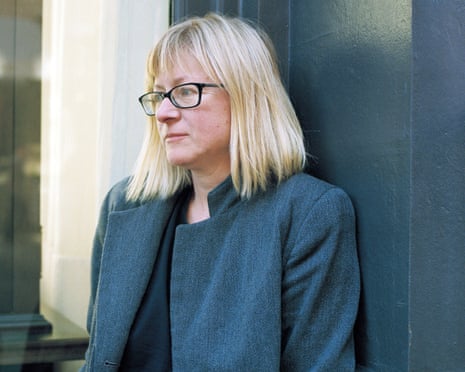
Detectives often find important clues by digging through rubbish. That approach paid off tremendously for systems biologist Yifat Merbl. When she and her team investigated cellular recycling centres known as proteasomes, they uncovered an entirely new part of the immune system.
侦探们常常通过翻找垃圾找到重要线索。系统生物学家 Yifat Merbl 也因这种方法获得了巨大成果。当她和她的团队研究细胞内的回收中心——蛋白酶体时,他们发现了一个免疫系统全新的组成部分。
“Up ’till now, we couldn’t detect it,” Merbl says, “because we didn’t look at the garbage cans of cells.”
“直到现在,我们都没能检测到它,”Merbl 说,“因为我们没有查看细胞的垃圾箱。”
Nature’s 10 navigation primary
Nature’s 10 is a series of profiles about the people behind 2025’s key scientific developments.
From her office at the Weizmann Institute of Science in Rehovot, Israel, she holds up a blue plastic model of a proteasome, a barrel-shaped structure with a hollow core. The function seems simple: proteins enter the chamber, where they are shredded and then exit as smaller peptide fragments. But the machinery is surprisingly elaborate. The core comprises more than two dozen protein subunits and can associate with a variety of regulatory caps. If the goal is to slice and dice proteins, Merbl wondered, why the need for such complexity?
从以色列雷霍沃特魏茨曼科学研究所的办公室里,她举起一个蓝色的塑料蛋白酶模型,这是一个呈桶状结构、具有空心核心的装置。其功能看似简单:蛋白质进入腔体,在那里被分解成更小的肽段后排出。但这一机器的结构却出人意料地复杂。核心部分由超过 20 多个蛋白质亚基组成,并能与多种调节性帽结构结合。如果目标只是切割和分解蛋白质,默布拉不禁疑惑,为何需要如此复杂的结构?
Merbl and her team used mass spectrometry to identify the peptides created by proteasomes in a variety of cells. They then compared the sequences of these peptides to those with known functions, using public databases. Many, they found, matched ones known to obliterate bacteria, such as by piercing their membranes. The team identified other fragments — about 1,000 in total — with sequences that, according to an algorithm, make them likely to be antimicrobial.
默布拉和她的团队利用质谱技术,识别了蛋白酶在多种细胞中产生的肽段。他们随后将这些肽段的序列与已知功能的序列进行比较,使用了公共数据库。他们发现,许多肽段与已知能够消灭细菌的肽段相匹配,例如通过刺穿细菌膜来实现杀菌作用。该团队还识别出其他约 1000 个片段,其序列根据算法分析,很可能具有抗菌活性。
There might be more. When Merbl and her colleagues used computer models to chop up all human proteins into all possible peptide fragments, they found that there are more than 270,000 possible antimicrobials. The team had uncovered what seemed to be a new immune defence mechanism.
还可能有更多。当梅尔布和她的同事使用计算机模型将所有人类蛋白质切割成所有可能的肽片段时,他们发现存在超过 270,000 种可能的抗菌肽。该团队似乎发现了一种新的免疫防御机制。
“This was literally where you have the goosebumps, because you realize that you may have found something fundamental,” Merbl says. Further experiments revealed that when cells are infected with bacteria, the proteasome swaps its regulatory cap for one that favours the production of bacteria-fighting peptides. It’s a first line of defence, Merbl says, one that operates independently of immune-cell activation.
“这简直让人起鸡皮疙瘩,因为你会意识到你可能发现了某种根本性的机制,”梅尔布说。进一步的实验显示,当细胞被细菌感染时,蛋白酶体会将它的调控帽替换为一个更有利于产生抗菌肽的帽。梅尔布表示,这是一种第一道防线,它独立于免疫细胞的激活而运作。
The results were published in March (K. Goldberg et al. Nature 639, 1032–1041; 2025) and they have many people in the field excited, says Ruslan Medzhitov, an immunologist at the Yale School of Medicine in New Haven, Connecticut. “There’s something that we thought is so familiar and so well understood, and then boom — something totally unexpected and exciting comes out of it.” What’s most surprising, he says, is that the peptides come from “regular run-of-the-mill cellular proteins” rather than ones specifically involved in immune defence.
这些结果于三月发表(K. Goldberg 等,Nature 639, 1032–1041; 2025),耶鲁大学医学院纽黑文分校的免疫学家鲁斯兰·梅德吉托夫(Ruslan Medzhitov)表示,这让该领域的许多人感到兴奋。“我们认为非常熟悉且理解透彻的东西,结果却突然出现了完全出乎意料且令人激动的发现。”他说,最令人惊讶的是,这些肽来自“普通的细胞蛋白”,而不是专门参与免疫防御的蛋白。
This means that processing by the proteasome vastly increases the number of jobs that a single protein can have, says Cesar de la Fuente, a bioengineer at the University of Pennsylvania in Philadelphia. “It’s a very smart way, evolutionarily, of encoding a lot of functionality in a single gene,” he says.
这意味着蛋白酶体的处理大大增加了单个蛋白质所能承担的任务数量,费城宾夕法尼亚大学生物工程师塞萨尔·德·拉·富恩特说。“从进化角度来看,这是一种非常聪明的方式,能够在单个基因中编码大量功能。”他说。
Such success was not something that Merbl had ever dreamt she would achieve. Her attention-deficit/hyperactivity disorder had made school especially challenging. She loved computer science and biology as a child, but struggled to attend classes and didn’t graduate from high school with her peers. Over the years, however, she has come to accept that the way her brain works is an advantage, not a flaw. It gives her a different perspective.
梅尔布从未想过自己能取得这样的成功。她患有注意力缺陷/多动障碍,这使她在学校学习尤其困难。她小时候热爱计算机科学和生物学,但难以集中注意力上课,也没有和同龄人一起高中毕业。然而,多年来她逐渐接受了自己的大脑运作方式其实是一种优势,而非缺陷。这让她有了不同的视角。
Marc Kirschner, a biochemist and systems biologist at Harvard Medical School in Boston, Massachusetts who served as Merbl’s doctoral adviser, remembers her passion, her brilliance and her dedication. She liked embarking on scientific fishing expeditions and not knowing what she would catch. “She’s made some terrific discoveries,” he says.
马克斯·梅尔布(Merbl)的博士导师、波士顿马萨诸塞州哈佛医学院的生物化学家和系统生物学家马克·基尔舍纳(Marc Kirschner)回忆起她的热情、才华和奉献精神。她喜欢进行科学探索,即使不知道会发现什么。他说:“她做出了一些非常了不起的发现。”
She and her team faced a setback this summer when their lab was destroyed by an Iranian missile strike. Merbl, who lives on campus, waited out the attack in a bomb shelter, then rushed to her lab. The building next door was on fire, and the power was off. She made her way through the building, navigating broken glass while wearing flip-flops, and closing freezer doors to keep samples cold. Merbl lost her mass spectrometer, but importantly, she says, no one was injured. Now the team is in a new space on campus and ready to keep looking for other secrets hiding in proteasome-produced peptides.
今年夏天,梅尔布和她的团队遭遇了一次挫折,当他们的实验室被伊朗导弹击中摧毁时。梅尔布住在校园内,她在防空洞中避难,随后赶往实验室。隔壁建筑起火,电力中断。她穿过大楼,在穿着人字拖的情况下避开碎玻璃,并关闭冷冻柜门以保持样本低温。梅尔布失去了她的质谱仪,但她强调,幸运的是,没有人受伤。现在,团队已经搬到了校园内的新空间,准备继续寻找其他隐藏在蛋白酶体生成肽中的秘密。
“It’s not going to be only antimicrobials,” she says. “It’s not the end of the story.”
她说:“这不仅仅局限于抗菌物质,‘这不是故事的结束’。”